
Category: Uncategorized
-
Dwain Northey (Gen X)

Donald Trump’s ambitions for a second term have gone from authoritarian cosplay to full-blown aristocratic delusion, with recent reports suggesting he wants to add a $200 million ballroom to the White House — a grotesque symbol of his desire to transform the seat of American democracy into a gilded palace of excess. This fantasy isn’t just about architecture; it’s emblematic of Trump’s vision for a second Gilded Age — one that mirrors the opulence and inequality of the late 19th and early 20th centuries, when men like Carnegie, Mellon, and Rockefeller amassed enormous fortunes while the majority of Americans toiled under brutal working conditions for scraps.
The original Gilded Age was a period of unprecedented wealth accumulation for a small elite. Titans of industry were heralded as self-made men, while their monopolies crushed competition, exploited workers, and manipulated government to serve their interests. Social mobility was largely an illusion. Tenement housing, child labor, violent strike-breaking, and political corruption were rampant. The veneer of prosperity hid the harsh reality for millions.
Trump’s vision revives this same ethos. His policies have historically favored tax cuts for the wealthy, deregulation, and privatization — measures that benefit the top 1% while leaving the working class behind. The $200 million ballroom isn’t just wasteful spending; it’s symbolic of how Trump sees leadership: not as public service, but as a personal brand extension, a stage set for royalty, not democracy.
To suggest a new Gilded Age will help the general public requires a suspension of historical understanding. Unless radically different from the first, a new Gilded Age would concentrate power further into the hands of corporate oligarchs, gut labor protections, and hollow out public services. While Trump might promise jobs and prosperity, what history shows us is that these “booms” are rarely shared equally.
If anything, the general public stands to lose more in this neo-feudal vision. Wealth does not trickle down; it pools at the top. The public ends up subsidizing the elite through bailouts, tax loopholes, and weakened oversight. In contrast to the populist narrative Trump peddles, his aspirations — whether it’s a ballroom or an economic model — serve to gild the cages the rest of us are trapped in, while the elite dance in marble halls built with public money.
-
Lyle Northey (Silent/Boomer)

A new wrinkle in the methods of getting people out of the country, now we are going to denaturalize individuals that we deem to be unfit. Who do you suppose they will target first? The person that has committed a crime like robbery or worse? Some one that runs a business that violates some rule like DEI or whatever? How about an individual that has been elected to Congress but represents the opposition? What a crook of crap this administration is has been pointed out in so many ways and it just gets worse. This rule, or law, or whatever you call it has popped up and most likely been overlooked because of all the other shit that been hitting the fan, and yet it could be so very devistating to many among us. The brutal methods used on people by ICE or whoever the MASKED men, they ain't the Lone Ranger, are show that they want someone to show even the slightest resistance so they can then be as brutal as possible. How much are these guys being paid to sink into the cesspool of subhumanity that is required to be an agent? One day we will see this rein of terror come to an end and when we do all records of who these guys are should be made public and all of them should be awarded the kind of prize they deserve. Let your imagination run wild as to what you feel those prizes should be. For starters I would expect that once this career goies away and they become known that they never get another job, cannot apply for assistance and the list goes on. Not only will this be negative for them but their families are not going to be very forgiving at that point. If any of you HERO's are reading this just keep in mind that what goes around comes around and your windfall today will very likely be your downfall tomorrow. These conformation hearings for some of the most unqualified people to fill important positions keeps moving along like a very dangerous snake. Why do the idiots keep voting for these people? If Trump has the stroke to primary everyone then all of you should make him put his money and his inflluence on the table. Think about what his tariff policies are doing to coorporations and the wealthy owners behind them. Do you honestly believe that his influence is still high enough to go after all that are up for reelection? We all know the GOP has for years tried to destroy every public supportive program and oganization we have, an yet when and if they considered that without the middle and lower classes they would have nothing it would seem obvious that their effort to destroy those programs in pretty much like committing self destruction. Keep on with all these negative efforts and watch as the world shrinks. When you can no longer go to other countries because we Americans are no longer welcome. When there are no venues to entertain you grandchildren becasue there are no people to man Disneyland and all you have left are some golf courses, possibly overgrown as there are not labor personnel to keep things up. Without those that do the work all the money in the world is just as useless as statement coming from your great leader, pure unaulterated bullshit. -
Dwain Northey (Gen X)
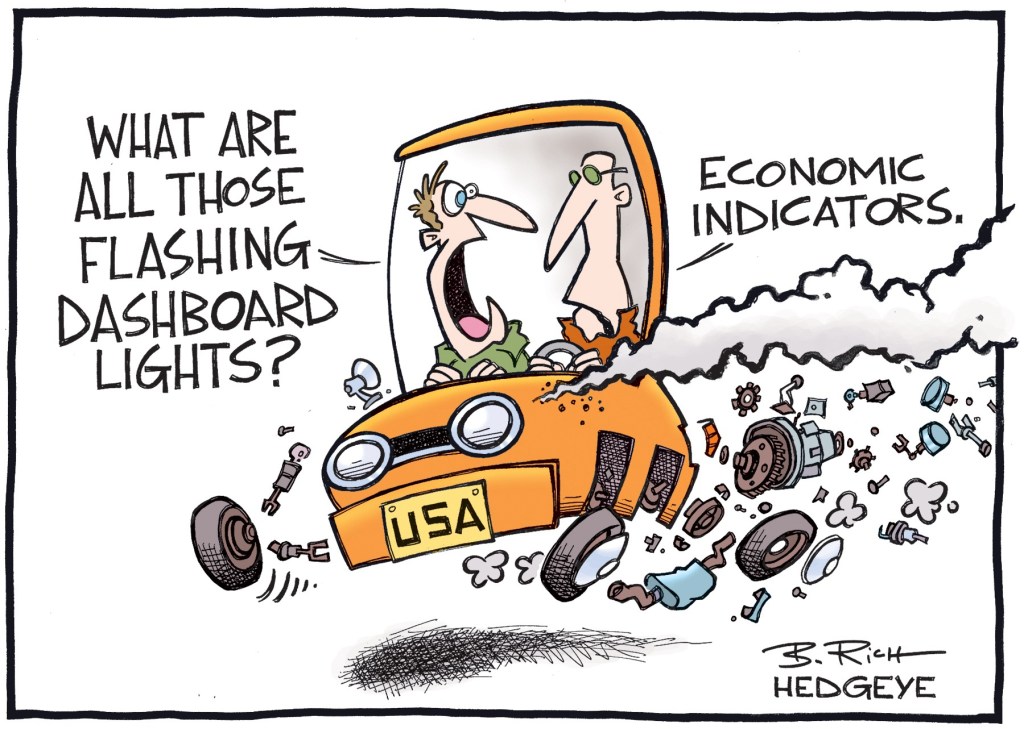
It’s no accident that under the current Trump administration, access to clear, reliable economic data has become murky, and public understanding of what’s actually happening with inflation, growth, and labor markets has been clouded by a relentless flood of misinformation. What Trump’s team has excelled at isn’t sound economic policy—it’s narrative manipulation. The administration has gutted key agencies, sidelined experts, and twisted data to serve political ends, creating a smoke-and-mirrors economy where perception is more important than reality.
The Department of Labor, the Bureau of Economic Analysis, and even the Federal Reserve have come under political pressure to toe the line or face marginalization. Economists who once had institutional backing to present nuanced, sometimes inconvenient truths have either been pushed out or ignored. The Trump administration has chipped away at data transparency by withholding reports, editing press releases, or flooding the media space with contradicting, partisan claims. The result? A population left in the dark about what’s really happening with wages, cost of living, and long-term economic health.
Take inflation, for example. While the administration touts “booming” consumer spending or record stock market numbers as evidence of success, it buries the deeper truth: inflation has steadily eroded real purchasing power for average Americans. Meanwhile, Trump and his spokespeople point fingers—at immigrants, at the Fed, at previous administrations—while cherry-picking short-term metrics that make the economy seem stronger than it is. The administration has carefully crafted the illusion of prosperity, often by parroting manipulated job numbers or GDP figures taken out of context.
Moreover, Trump’s approach to economic messaging has shifted the role of data from a shared truth to a partisan weapon. This administration understands that if you control the narrative, you control perception. And if people believe the economy is strong, they’ll act accordingly—even if it’s built on fiction. That’s the real success: not economic performance, but narrative domination.
So yes, the Trump administration has done a “good job”—just not in service of the truth. They’ve mastered the art of masking economic pain with patriotic rhetoric and selective statistics. And in doing so, they’ve eroded the public’s ability to distinguish between fact and fiction when it comes to the economy—a dangerous legacy that will outlast any one presidency.
-
Dwain Northey (Gen X)

It is no mystery that the less informed a population is, the more uninvolved and disempowered it becomes in shaping the conditions of its own life. Knowledge is power, and without it, people are far more likely to accept the status quo, even when it works against their interests. When individuals lack the tools to critically assess their circumstances, question authority, or understand systemic forces at play, they become passive participants in their own oppression. This is not an accident—it’s a strategy. The less you know, the less likely you are to act. And that apathy is precisely what the current GOP thrives on.
Nowhere is this more apparent than in the relentless attacks on the Department of Education under this administration. From slashing funding to promoting the privatization of schools, there is a concerted effort to gut public education and replace it with a market-driven model that prioritizes profit over people. This isn’t just about dollars—it’s ideological. A robust, accessible, and equitable education system equips individuals with the tools to question power, organize, and vote in ways that challenge entrenched hierarchies. That’s bad news for a party increasingly reliant on misinformation, culture wars, and gerrymandering to maintain its grip on power.
For the modern GOP, the dismantling of the Department of Education is not a side project—it’s a wet dream. Starving the public of education means starving them of civic literacy, historical context, and critical thinking skills. It means ensuring that generations of Americans are more concerned with performative patriotism than actual democratic participation. This is not about improving schools; it’s about neutralizing the public as a political force.
The less people understand about how systems of power operate, the more likely they are to internalize their own marginalization as a personal failure rather than a structural issue. That ignorance serves the GOP’s interests beautifully. It’s easier to sell scapegoating and slogans when the electorate has been deliberately undereducated and overwhelmed. And when you defund education, you don’t just save money—you silence dissent.
So, no, it’s not a mystery. It’s a strategy. And if we don’t push back, we are handing the keys of our future to those who benefit from a public kept in the dark.
-
Dwain Northey (Gen X)
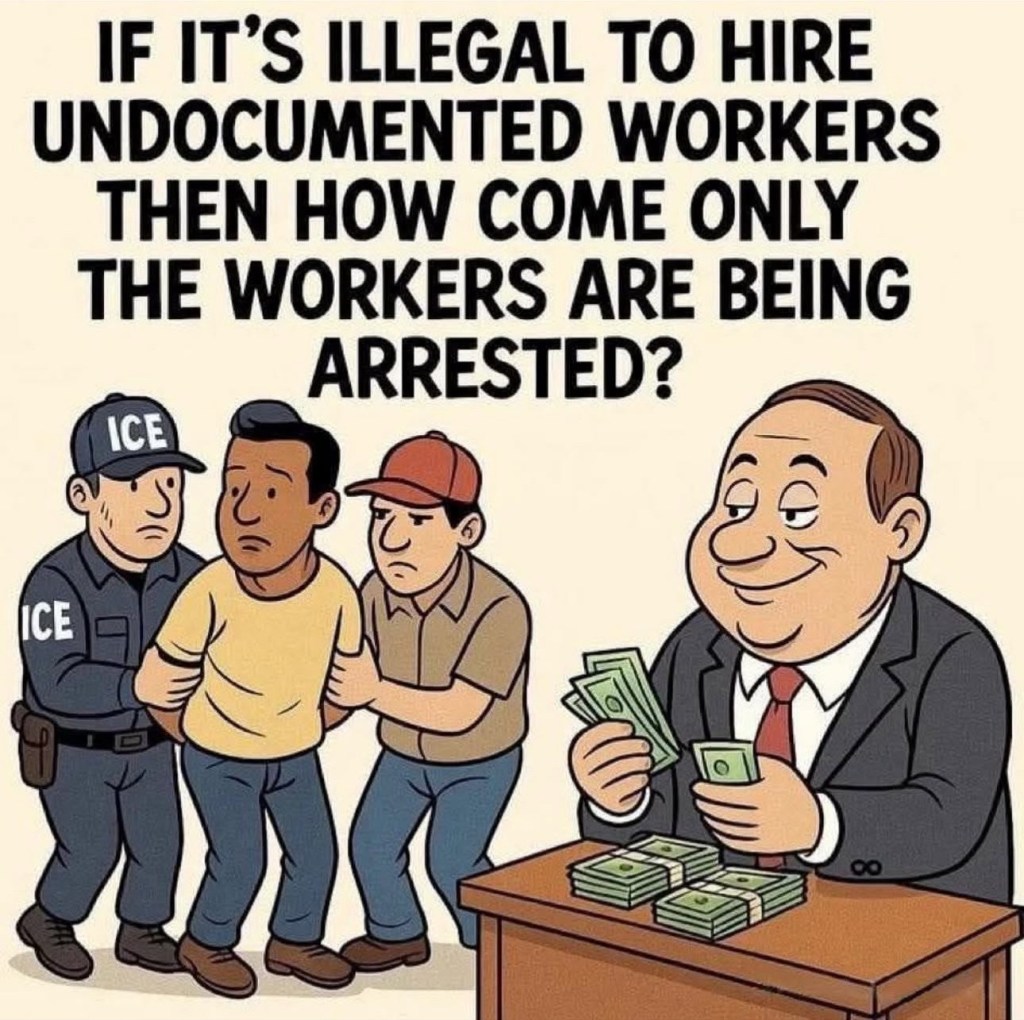
The real crime in the so-called “immigration crisis” isn’t the desperate worker trying to feed their family—it’s the employer who knowingly exploits that desperation. For too long, our political and legal systems have scapegoated undocumented workers while turning a blind eye to the corporations and business owners who profit handsomely from their labor. This isn’t just hypocrisy—it’s complicity. Employers who hire undocumented immigrants without providing legal protections, fair wages, or safe working conditions are breaking the law and violating basic human decency. Yet it’s the workers who end up in handcuffs, in cages, or deported. That’s backwards.
Undocumented people don’t risk their lives crossing borders for fun. They do it because they’ve been forced to—by poverty, violence, corrupt governments, and U.S. foreign policy that has destabilized entire regions. Once here, they do the jobs no one else wants for wages no one else will accept. Meanwhile, the employers who cut those checks—often under the table—reap enormous benefits from their silence and vulnerability.
If we’re serious about addressing illegal immigration, we must start by going after the demand side: the employers who hire undocumented labor to undercut wages and avoid accountability. These are not accidental hires. These are calculated business decisions to maximize profit by exploiting human beings. That’s not just bad policy—it’s morally bankrupt.
Charging and convicting exploitative employers—imposing serious financial and criminal penalties—would dry up the incentive to hire undocumented workers under the table. It would protect both immigrants and native-born workers by raising labor standards and enforcing the laws we already have.
So stop criminalizing survival. Start criminalizing exploitation. It’s not the undocumented worker picking strawberries or cleaning hotel rooms who’s undermining the law—it’s the boss signing the paycheck, laughing all the way to the bank.
-
Dwain Northey (Gen X)

Donald Trump didn’t break American politics — he’s just the most grotesque culmination of a decay that began decades ago, with Richard Nixon laying the groundwork and Ronald Reagan cementing the rot. Trump is a product, not an aberration. His rise makes perfect sense when you trace the lineage of political cynicism, racial dog-whistling, corporate servitude, and the weaponization of grievance that took root with Nixon and blossomed under Reagan.
Nixon pioneered the “Southern Strategy” — a calculated appeal to white resentment in response to civil rights gains. He institutionalized the idea that racial division was a winning tactic, packaging it in coded language about “law and order.” Meanwhile, the Watergate scandal revealed a president who viewed the office as a tool for personal power, one who believed rules were for suckers and accountability was optional. Sound familiar?
Then came Reagan, the actor-turned-politician who sold a Hollywood fantasy of America while gutting unions, deregulating everything in sight, and slashing social programs — all while ballooning the deficit and feeding the rich. His genial smile masked a ruthless agenda that elevated greed to gospel and painted government not as a force for good, but as the enemy. The era of “trickle-down” economics began not just a redistribution of wealth upward, but a moral restructuring of the nation. He also helped mainstream the notion that facts were flexible, media could be manipulated, and charisma could outweigh substance.
Trump inherited this legacy and stripped it of all pretense. He didn’t invent racism, corruption, or contempt for democratic norms — he just broadcast them on social media in all-caps. Where Nixon used back channels, Trump used Twitter. Where Reagan coated cruelty in optimism, Trump reveled in it. He is the id of the modern conservative movement, made flesh.
If Nixon planted the seed and Reagan nurtured it, Trump is the bitter fruit. The American right didn’t accidentally stumble into Trumpism — they spent half a century cultivating it.
-
Dwain Northey (Gen X)
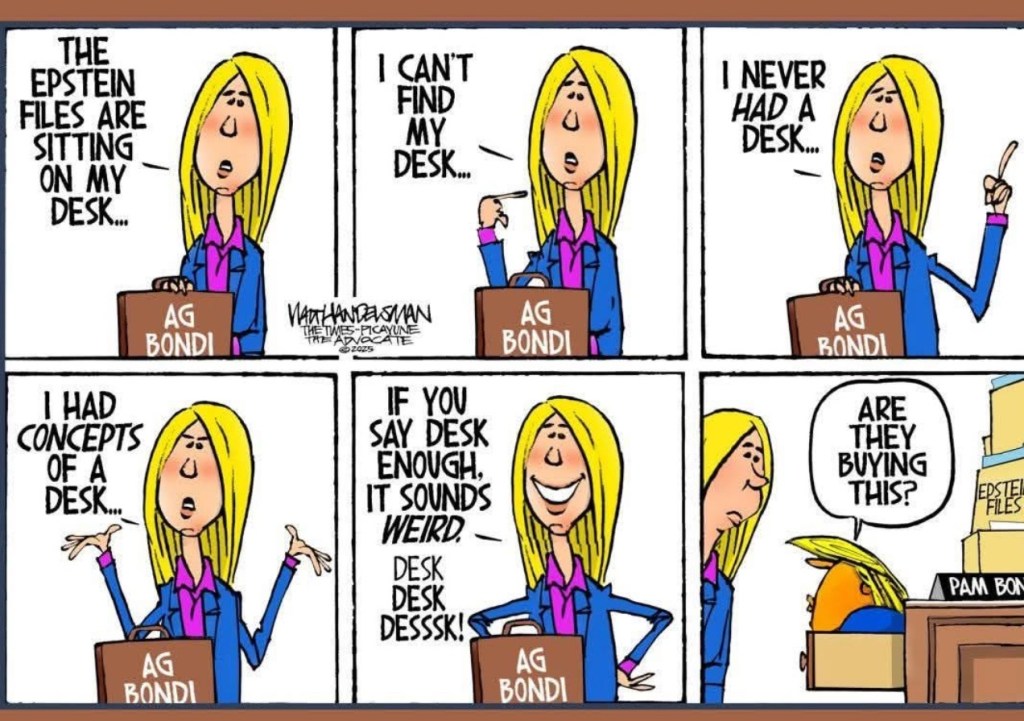
The term “credible” is doing a tremendous amount of heavy lifting these days—especially in defense of Donald Trump and the establishment’s persistent unwillingness to release the full Epstein files. When allegations arise or associations are uncovered, we are constantly told that only “credible” claims warrant public concern. But who defines credible? Who gets to decide which victims, whistleblowers, or witnesses meet that opaque threshold?
In Trump’s case, “credible” becomes a shield—a way to dismiss or delay engagement with accusations. His defenders insist there’s no credible evidence of wrongdoing despite stacks of lawsuits, documented payouts, and a mountain of suspicious behavior. The bar for credibility is raised so high it’s virtually unreachable, especially when applied to people who lack institutional power. Claims must be impeccably documented, unemotional, and vetted by a media establishment often complicit in protecting elites. Meanwhile, Trump’s own lies, contradictions, and conspiracies are granted infinite grace.
Nowhere is the weaponization of credibility more stark than in the Epstein case. We are told time and again that only certain allegations, only certain documents, only certain names are credible enough for public release. The rest remain sealed—presumably to protect the reputations of men who walked too close to Epstein’s orbit. But “lack of credibility” is not a reason to suppress evidence; it’s often just an excuse to avoid accountability.
This double standard reveals a painful truth: credibility is not a neutral metric, but a gatekeeping tool used by institutions to protect power. If the Epstein files were fully released, the public could decide for themselves what is credible. But as long as that decision remains in the hands of those with something to lose, credibility will continue doing the heavy lifting of silence.
-
Dwain Northey (Gen X)
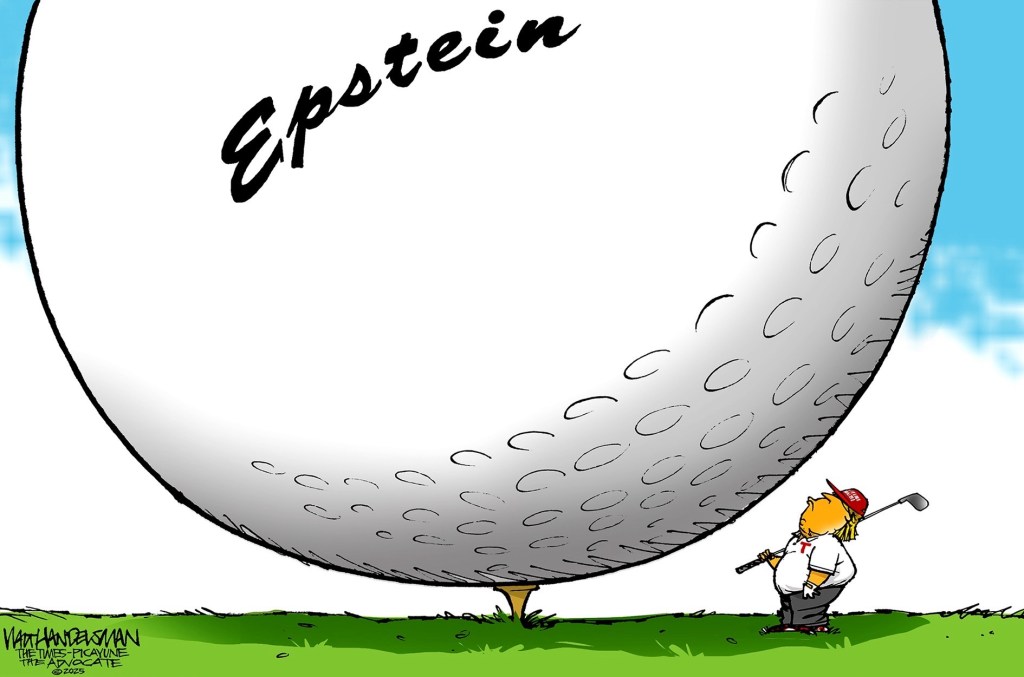
Many Americans feel a deep sense of pride and solidarity with the people of Scotland for their bold and creative protest against Donald Trump—often mockingly referred to as “Mango Mussolini” due to his distinctive appearance and authoritarian tendencies. Scotland has never been shy in making its views clear when it comes to Trump, especially given his history of controversial developments there, such as the highly contested golf courses. But beyond local grievances, many in the U.S. see Scotland’s loud and unwavering resistance as a symbol of global unity in defense of democracy and integrity.
Whether it’s the iconic “Trump baby” balloon flying over protests, signs declaring “Yer Maw Hates Ye,” or even the viral moments of bagpipers drowning out Trump’s appearances, the Scottish people have used wit, satire, and direct action to express what many Americans have felt. While Trump’s presidency was marked by division, misinformation, and an erosion of democratic norms, Scotland’s resistance has served as a mirror of moral clarity.
In a time when some U.S. institutions failed to hold Trump accountable, the unapologetic opposition from a small but mighty country overseas offered comfort—and even a spark of hope—for Americans who felt betrayed by what the presidency had become under his leadership. It wasn’t just about Trump’s actions abroad or his treatment of Scotland; it was about taking a principled stand against authoritarianism, lies, and corruption.
So yes, we are proud. Proud that across the Atlantic, people refused to be silenced or intimidated. Proud that truth, humor, and resistance crossed borders. And grateful that Scotland stood, bagpipes blazing, as a reminder that the world was watching—and that many were not fooled by the bluster of a man who disgraced the office he held.
-
Lyle Northey (Silent/Boomer)
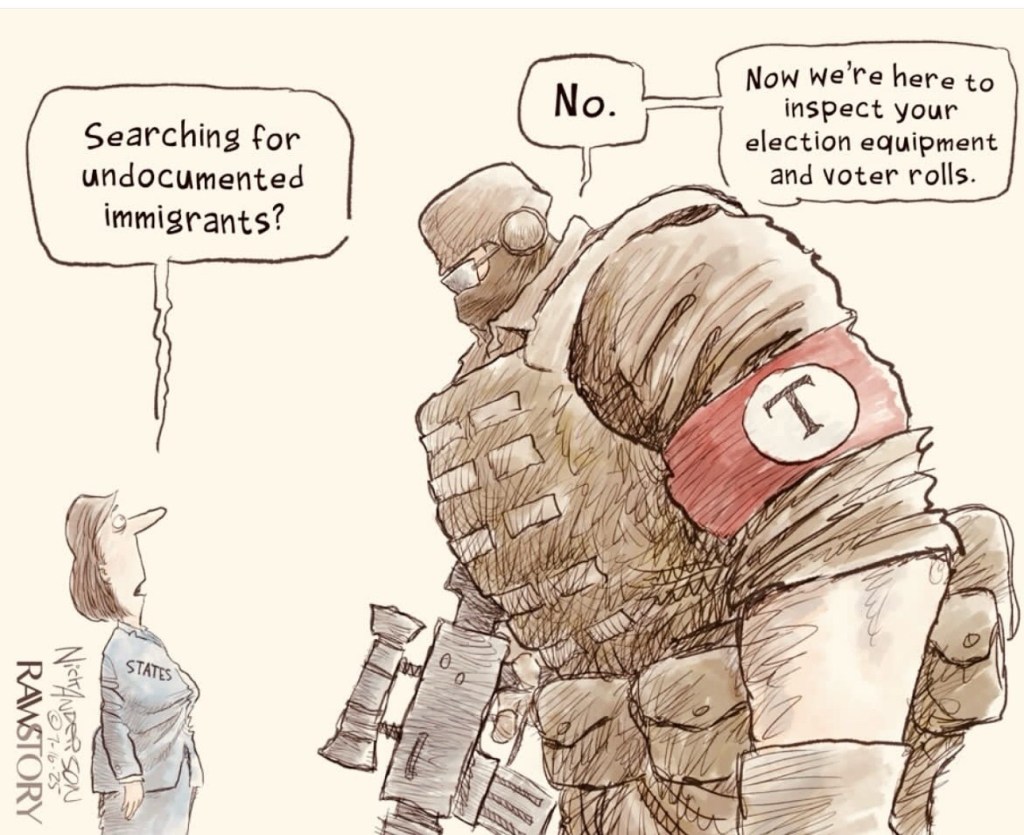
A new wrinkle in the methods of getting people out of the country, now we are going to denaturalize individuals that we deem to be unfit. Who do you suppose they will target first? The person that has committed a crime like robbery or worse? Some one that runs a business that violates some rule like DEI or whatever? How about an individual that has been elected to Congress but represents the opposition? What a crook of crap this administration is has been pointed out in so many ways and it just gets worse. This rule, or law, or whatever you call it has popped up and most likely been overlooked because of all the other shit that been hitting the fan, and yet it could be so very devistating to many among us. The brutal methods used on people by ICE or whoever the MASKED men, they ain't the Lone Ranger, are show that they want someone to show even the slightest resistance so they can then be as brutal as possible. How much are these guys being paid to sink into the cesspool of subhumanity that is required to be an agent? One day we will see this rein of terror come to an end and when we do all records of who these guys are should be made public and all of them should be awarded the kind of prize they deserve. Let your imagination run wild as to what you feel those prizes should be. For starters I would expect that once this career goies away and they become known that they never get another job, cannot apply for assistance and the list goes on. Not only will this be negative for them but their families are not going to be very forgiving at that point. If any of you HERO's are reading this just keep in mind that what goes around comes around and your windfall today will very likely be your downfall tomorrow. These conformation hearings for some of the most unqualified people to fill important positions keeps moving along like a very dangerous snake. Why do the idiots keep voting for these people? If Trump has the stroke to primary everyone then all of you should make him put his money and his inflluence on the table. Think about what his tariff policies are doing to coorporations and the wealthy owners behind them. Do you honestly believe that his influence is still high enough to go after all that are up for reelection? We all know the GOP has for years tried to destroy every public supportive program and oganization we have, an yet when and if they considered that without the middle and lower classes they would have nothing it would seem obvious that their effort to destroy those programs in pretty much like committing self destruction. Keep on with all these negative efforts and watch as the world shrinks. When you can no longer go to other countries because we Americans are no longer welcome. When there are no venues to entertain you grandchildren becasue there are no people to man Disneyland and all you have left are some golf courses, possibly overgrown as there are not labor personnel to keep things up. Without those that do the work all the money in the world is just as useless as statement coming from your great leader, pure unaulterated bullshit.


You must be logged in to post a comment.