An emolument is basically money, a gift, or a benefit that someone gets because of their job or position. In the U.S. Constitution, there are two main rules about emoluments:
Foreign Emoluments Clause: A U.S. official (like the president) isn’t allowed to accept gifts or payments from foreign governments without permission from Congress. Domestic Emoluments Clause: The president gets a fixed salary and isn’t supposed to receive any extra money or benefits from the U.S. government or individual states.
How did Donald Trump allegedly break these rules?
While Trump was president, he still owned his businesses, including hotels and golf resorts. Critics argue that:
Foreign governments spent money at Trump hotels, possibly to gain favor with him, which could be seen as a foreign emolument. State and federal officials also used his properties for events and stays, which might count as domestic emoluments. He didn’t fully separate from his businesses while in office, so any profit they made from government or foreign sources could be seen as personal benefit tied to his role as president.
Lawsuits were filed over this, but courts dismissed some of them without ruling on whether Trump actually violated the Emoluments Clauses.
In short: An emolument is a benefit you get from your job. Trump was accused of using the presidency to make money through his businesses, possibly violating rules meant to prevent corruption or conflicts of interest.
The writ of habeas corpus is a very important legal protection for our freedom. It means “you shall have the body” in Latin. This rule makes sure that if someone is put in jail or held by the government, they have the right to go to court and ask why they are being held. If the government does not have a good reason, the person must be set free.
This is important because it stops the government from putting people in prison unfairly or without proof. Without habeas corpus, someone could be locked up for a long time without ever knowing why or having a chance to defend themselves.
It protects all people, even during emergencies. The government cannot simply arrest people it doesn’t like or hold someone without charging them with a crime. It keeps the justice system fair and checks the power of the police and leaders.
In short, habeas corpus protects us from being jailed unfairly. It makes sure that our freedom is respected and that the law is followed. It’s one of the most basic rights in a free society. Without it, people could lose their freedom without a fair reason or trial.
Mother’s Day originated as a way to honor mothers and maternal figures, with its modern form rooted in the United States. The earliest precursor to the holiday dates back to ancient festivals, such as the Greek celebration of Rhea, the mother of the gods, and the Roman festival of Hilaria. In the 17th century, “Mothering Sunday” became a tradition in the United Kingdom, where people returned to their “mother church” and celebrated with family.
The American version of Mother’s Day began in the early 20th century, largely due to the efforts of Anna Jarvis. After her mother, Ann Reeves Jarvis, died in 1905, Anna wanted to honor her and promote a day of appreciation for all mothers. Ann Reeves had been a peace activist who cared for wounded soldiers during the Civil War and had organized Mothers’ Day Work Clubs to address public health issues.
Anna Jarvis organized the first official Mother’s Day celebration in 1908 in Grafton, West Virginia. By 1914, President Woodrow Wilson signed a proclamation designating the second Sunday in May as a national holiday. Ironically, Jarvis later opposed the commercialization of the holiday, believing it had strayed from its original intent of heartfelt tribute and gratitude.
SpaceX and Blue Origin are transforming space exploration, and their relationship with NASA is both supportive and disruptive. On the positive side, these private companies have revitalized the aerospace industry with innovation, competition, and cost efficiency. SpaceX, in particular, has become a crucial NASA partner. It provides cargo and crew transportation to the International Space Station (ISS), dramatically reducing NASA’s reliance on foreign space programs and helping the agency save money. Blue Origin, while not as operationally advanced, is developing technologies like the Blue Moon lander for NASA’s Artemis program.
The entry of these private companies has accelerated the pace of development. SpaceX’s rapid iteration of rocket designs, reusability goals, and lower launch costs have challenged traditional contracting models. NASA now benefits from commercial partnerships that allow it to focus on deep-space missions, like returning to the Moon and eventually reaching Mars, while outsourcing lower Earth orbit operations.
However, there are challenges. The influence of private interests can shift focus from scientific exploration to commercial gain. NASA must now navigate complex partnerships and dependencies that could reduce its control over mission priorities. Furthermore, competition for funding and contracts may fragment efforts, creating redundancy or conflict between NASA’s goals and those of private enterprises.
In essence, SpaceX and Blue Origin are helping NASA by providing new capabilities, reducing costs, and stimulating public interest in space. At the same time, they challenge the traditional role of a government-led space program. The future of NASA likely depends on its ability to adapt, collaborate effectively, and leverage private innovation while maintaining its core scientific and exploratory mission. Thus, these companies are neither purely helpful nor harmful—they are reshaping the ecosystem in which NASA must operate.
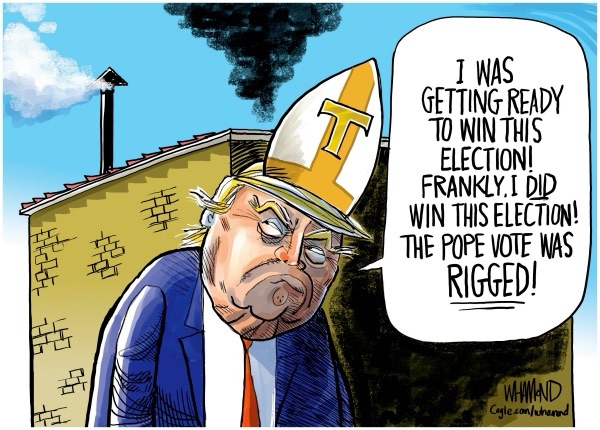
The adoption of a new pope in today’s world would carry significant religious, cultural, and geopolitical implications. As the spiritual leader of over 1.3 billion Catholics worldwide, the pope wields considerable influence not only in matters of faith but also in global humanitarian and moral discussions. A new pontiff’s vision, priorities, and personality could shape the direction of the Catholic Church for decades to come.
In the modern era, the pope is increasingly seen as a global moral authority. Issues such as climate change, economic inequality, war, migration, and human rights are topics the Vatican frequently addresses. A new pope could shift the tone and focus of these conversations—either emphasizing continuity with recent progressive stances, like those of Pope Francis, or opting for a more traditional, conservative approach. This would affect how the Church engages with younger generations, other religions, and secular governments.
A new pope may also impact internal Church governance, particularly concerning transparency, sexual abuse scandals, and the role of women and laity. These are pressing issues that demand reform and trust-building. A pontiff seen as a reformer could revitalize confidence in the Church, while a more conservative choice could deepen divisions within Catholic communities.
On the international stage, the pope often serves as a diplomat, mediator, and voice for peace. His stance on conflicts—such as those in the Middle East, Ukraine, or Africa—can influence public opinion and even political action. Additionally, in an age of polarization and rising nationalism, a new pope’s message of unity or division could ripple across societies.
Ultimately, the adoption of a new pope is more than a religious transition; it is a moment of global significance that will shape the Church’s role in a rapidly changing world.
Tariffs are taxes that a country puts on goods coming from other countries. When a government adds a tariff, it makes the imported goods more expensive. This affects how much people have to pay for those goods.
For example, imagine the U.S. puts a tariff on shoes made in China. If the shoes normally cost $50, a 20% tariff means an extra $10 is added. Now, the shoes will cost $60. The company that brings the shoes into the U.S. may not want to pay that extra cost. So, they raise the price, and the customer ends up paying more.
Another example is with food. Suppose the U.S. puts a tariff on cheese from France. If a block of cheese usually costs $5, a 25% tariff adds $1.25. The new price is $6.25. This makes imported cheese more expensive, so people might buy less of it. But they may also see higher prices on local cheese if demand increases.
Sometimes, companies in the U.S. also use parts from other countries to make things. If there is a tariff on those parts, like car parts from Mexico, it makes it more expensive to build a car. Then, the price of the car goes up.
So, tariffs can cause prices to rise for many things: clothes, food, cars, electronics, and more. Even if something is made in the U.S., it might still cost more because some parts come from abroad.
In short, tariffs are meant to protect local businesses, but they often make everyday items more expensive for consumers. People have to pay more, and that can be hard, especially for families with tight budgets.
Climate and weather are related concepts in atmospheric science, but they are distinct in terms of time scale, predictability, and impact. While both involve the study of atmospheric conditions such as temperature, humidity, wind, and precipitation, they differ fundamentally in duration and scope.
Weather refers to the short-term atmospheric conditions in a specific place at a specific time. It can change from hour to hour or day to day. Weather describes phenomena such as rain, sunshine, wind, storms, and snow. For example, a thunderstorm occurring in Houston on a summer afternoon is a weather event. Meteorologists use tools like radar and satellites to forecast weather days in advance, though accuracy decreases the further out the forecast goes.
Climate, on the other hand, refers to the long-term average of weather patterns over a significant period, typically 30 years or more, in a particular region. It encompasses long-term trends and patterns such as average temperature, precipitation, and seasonal variations. For instance, the Mediterranean climate is characterized by hot, dry summers and mild, wet winters. This pattern remains relatively stable over decades, although it can shift gradually due to natural or human-influenced factors.
A practical example to distinguish the two: if it snows in New York in April, that is a weather event. However, the fact that New York generally experiences cold winters with snow is part of its climate. Similarly, while Phoenix, Arizona, might receive rain on a rare summer day (a weather event), its climate is classified as desert due to the overall low rainfall and high temperatures year-round.
The time scale is a key difference. Weather forecasts typically cover the next few days to a week, while climate assessments look at data collected over many years. This difference also affects how predictable each is. Weather can be predicted with some accuracy over short periods, but it becomes increasingly difficult to forecast more than 10–14 days ahead. Climate, due to its long-term nature, is more predictable in terms of trends and patterns. For example, we can confidently say that winters in Canada will be cold for decades to come, but we cannot predict whether it will snow on January 15th next year.
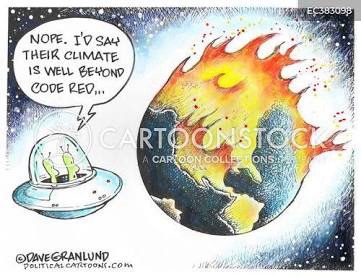
Climate change further illustrates the distinction. Global warming is a shift in climate patterns caused largely by human activities such as burning fossil fuels. It is not a single weather event but a gradual alteration of the Earth’s climate over decades. Rising average global temperatures, melting polar ice, and more frequent extreme weather events are evidence of climate change. However, a single cold winter does not disprove climate change—it is just a weather variation within a larger climate trend.
In summary, weather is what you experience in the short term—sunny, rainy, hot, or windy—while climate is the average of such conditions over a long time. Both are essential for understanding the environment, but they serve different purposes and scales of analysis.
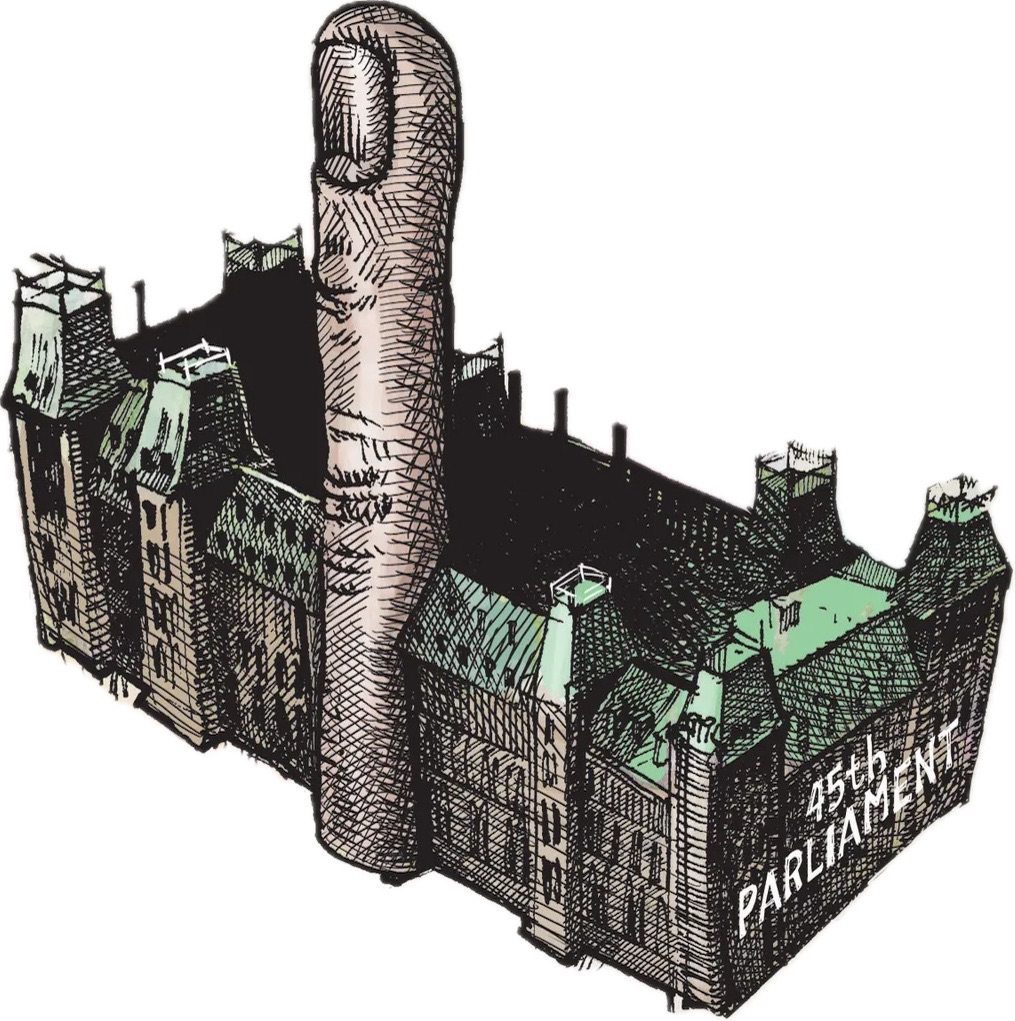
The 2025 elections in Canada and Australia stand in indirect opposition to Donald Trump’s “America First” policies, highlighting a broader, more inclusive approach to governance compared to the isolationist rhetoric of the former U.S. president.
In Canada, Prime Minister Justin Trudeau is expected to defend progressive policies focusing on multilateralism, climate change, and inclusivity. Trudeau’s government has actively championed international cooperation, particularly through organizations like the United Nations and the Paris Agreement on climate change. His emphasis on diversity, human rights, and a balanced approach to global trade contrasts with Trump’s “America First” stance, which often undermined international alliances and agreements, such as the withdrawal from the Paris Agreement and NATO criticisms. Canada’s 2025 elections will likely reaffirm a commitment to diplomacy and shared global responsibility, rejecting the isolationist tendencies that Trump endorsed.
Similarly, Australia’s political landscape in 2025 is poised to continue its engagement with the world through progressive foreign policies and active participation in regional stability efforts, particularly in the Indo-Pacific region. Australia, under the leadership of Anthony Albanese’s Labour Party, has positioned itself as a strong supporter of international partnerships, especially concerning climate action and economic stability. Unlike Trump’s protectionist approach that prioritized tariffs and trade wars, Australia is likely to continue championing free trade agreements and collaboration with key international partners like the European Union and ASEAN.
Both Canada and Australia’s 2025 elections will showcase an emphasis on globalism, shared prosperity, and diplomacy, which starkly contrasts with the “America First” ideology. In essence, these elections symbolize a rejection of protectionist nationalism in favor of multilateralism, thus indirectly challenging the policies that defined Trump’s presidency.







 Esoteric Meandering Shouting Into the Void
You must be logged in to post a comment.