Category: Uncategorized
-
Dwain Northey (Gen X)

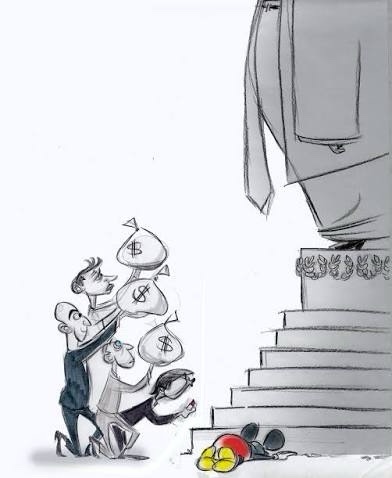
So it’s been a couple of weeks since somehow it was decided that a convicted felon should be the head of our government, and now for many that is sinking in. Just like Breksit in the UK people are googling, what is a tariff?, is the ACA and ‘Obamacare’ the same thing?. These are just a couple of the questions being asked and sadly those now asking should have asked before casting their vote.
The next at least 2 years are going to be a rolling shit show I am only hoping that enough of us have fight left in us so that we don’t turn into Russia or Turkey and lose everything that we have collectively spent 225 building.
-

Initiation Ceremonies Can Be Unnerving
Those who are interested in the cloak-and-dagger aspects of Freemasonry are rarely disappointed when learning of the initiation rites for newcomers. According to author Pat Morgan’s The Secrets of the Freemasons, traditionally, a candidate is ordered to roll up a pant leg and open their shirt before being blindfolded and led by a cable tow into a lodge. The candidate then feels a dagger placed to their chest as they’re asked a series of questions, and they’re warned that they’ll have their throat cut if they divulge any secrets of the brotherhood (or sisterhood — female freemasons, who are largely limited to their own groups, undergo similar rites).
As these rituals are solely for candidates for the first degree of Freemasonry, the Entered Apprentice, there are different ceremonies — and warnings — for those awaiting entry to the next two degrees, Fellow Craft and Master Mason. (Beyond these three basic degrees, the total number of degrees differ according to the specific sect of Freemasonry. For example, members of the Scottish Rite can reach a maximum of 33 degrees.) However, Morgan stresses that punishments were never literally carried out and are no longer part of the official oaths.
-

Coin flips are not actually random.
Coin flipping is a time-honored tradition for making decisions. Long before the NFL used the method to determine opening kickoffs, Romans employed coin tossing to settle personal disputes (though they called it “heads or ships,” a reference to the Roman coin’s two-faced Janus on one side and the prow of a ship on the other). While the mechanics of coin flipping are simple enough — guess a side and flip — the physics ofhow a coin flips are anything but. By exploring this complicated motion, scientists have discovered that coin flips are not as random (and thus impartial) as most of us think.
A 2023 study from the University of Amsterdam flipped 350,757 coins across 46 different currencies and discovered that a coin flipped to its starting position 50.8% of the time — close to 50/50, but not quite. In other words, if a coin started heads up, there was a slightly greater chance it would land heads up, too. This proves a previous theorem, developed in 2004, which argued that coin tosses landed as they started about 51% of the time. This small difference likely won’t dissuade humans from practicing the coin flip tradition, however. A more serious concern comes from a 2009 study, which revealed that coin tosses can be easily manipulated with just a few minutes of practice. So if you’re relying on the “randomness” of a coin toss to determine important decisions, make sure you trust the person doing the flipping.
-

‘Bomb Cyclone’ and Atmospheric River Pummels U.S. West Coast
A major windstorm and an atmospheric river are set to unleash a “firehose” of precipitation from California to British Columbia
The U.S. is experiencing opposing weather extremes right now: The West Coast is being drenched by a “bomb cyclone” and an atmospheric river that is pulling in moisture from the tropics and spraying it out like a firehose. Meanwhile, much of the eastern half of the country (as well as the northern plains and some of the desert Southwest) are experiencing drought.
Though the moisture out West is somewhat welcome–especially snowfall, which supplies much of the region’s water as it melts out in spring and summer–it can also cause a lot of damage. The ground can’t quickly soak up torrential downpours, and the burn scars of fires are particularly impervious to water, raising the threat of flash floods and debris flows.
Meanwhile, too little rain has fallen over the eastern half of the country over the past couple of months, particularly in the Northeast. New York City is under a drought warning for the first time in more than two decades. Wildfires in New Jersey and New York have been burning much more frequently and more readily than is typical. I’ll have more on the drought situation in the coming days, so stay tuned. — Andrea Thompson
-

Humans invented alcohol before we invented the wheel.
Few inventions have shaped the course of history more than the wheel, which dates back to roughly 3500 BCE. That may seem ancient (and it is, by definition), but it’s positively fresh-faced compared to what was apparently a higher priority for our ancestors: alcohol, which is at least 9,000 years old. That knowledge comes to us from Qiaotou, China, where pottery containing alcohol residue was discovered in 2021. Also found at the site were two skeletons, suggesting it was a burial pit and that consumption of beer — in this case made from rice, tubers, and pearl barley — has long been a part of funerals.
Though alcohol comes in many forms, there’s only one kind that humans can consume safely: ethanol, which is present in every boozy beverage we drink. The other types include methanol and isopropyl, which are poisonous to humans even in small doses because they’re metabolized as toxins. Both have their uses, however: Isopropyl, the primary ingredient in rubbing alcohol, is widely used in cleaning products and disinfectants, while methanol is used in everything from fuel and antifreeze to plastic and construction materials.
-

William Tell Didn’t Shoot an Apple Off His Son’s Head
You probably know the legend of William Tell, or at least the gist of it. During the period of the Old Swiss Confederacy, Tell, a local farmer and renowned marksman, refused to acknowledge Austrian authority and was forced to shoot an arrow at an apple on his son’s head. In case he failed, he saved an arrow for the governor who had ordered him to do so. This, the story goes, inspired resistance to Austrian rule among the Swiss people.
There’s one problem: Many historians say Tell never existed in the first place.
The basic tale we’ve come to associate with Tell is common in European folklore, sometimes predating Tell himself. In several nearly identical versions, spare arrow and all, only the archer (and his oppressor) change; in some, the central figure is a German folk hero, a Danish chieftain, or English outlaw Adam Bell.
Even without that context, many consider the source dubious. The legend was first detailed around 1570, 250 years after it was supposed to have taken place. Later in the story, Tell is part of an oath of freedom and unity with leaders of three different areas. But other accounts of this event, which inspired Swiss Independence Day, say it took place several years earlier — without anybody named “William Tell” present.
However, thanks to works such as Friedrich Schiller’s 1804 play William Tell and the iconic “William Tell Overture” (from a French opera by the same name), Tell is still a household name throughout the world. Just maybe a fictional one.
-

Coffee Doesn’t Stunt Your Growth
A long time ago, studies suggested that coffee could cause osteoporosis, a condition that causes bones to lose density, so a myth developed that coffee could stunt your growth. Later studies showed no clear link between coffee drinking and osteoporosis — it’s just that people who drank more coffee tended to not drink as many calcium-rich beverages such as milk, and lack of calcium can contribute to osteoporosis. However, osteoporosis itself doesn’t tend to make people shorter (although it’s associated with bone fractures that can). Nevertheless, the old wives’ tale persisted. If you have growing left to do, just make sure to eat a balanced diet and get all your vitamins and minerals.
-

Nine cities have served as America’s capital.
From 1776 to 1800, the United States capital bounced around between nine different cities. This frequent relocation was due to a mix of safety concerns amid the American Revolutionary War and a lack of a bureaucratic infrastructure in one centralized place. Philadelphia served as the nation’s first capital (at the time, the capital was considered to be the city where Congress met and enacted legislation) after the adoption of the Declaration of Independence on July 4, 1776. But due to safety concerns regarding a potential British attack on the city, Congress relocated to Baltimore, Maryland, on December 20, 1776, and the seat of government remained there for just over two months.
Congress returned to Philadelphia in March 1777, but fled once again due to the British occupation of the city that September. Delegates retreated further into Pennsylvania, settling in Lancaster for a single day on September 27, 1777, and then moving to York. After the British army departed Philadelphia in June 1778, the capital returned to the city for roughly five years. But during the Pennsylvania Mutiny of 1783 (an uprising of soldiers over unpaid wages), Congress vacated Philly in June and headed to Princeton, New Jersey. Future relocations took Congress into the Maryland State House in Annapolis, then to Trenton, New Jersey, followed by New York City. In July 1790, the Residence Act was signed into law, establishing Washington, D.C., as the nation’s official capital. It also reestablished Philadelphia as a temporary capital until the city of D.C. was further developed and the proposed Capitol building was complete. Congress returned to its original home for 10 years until November 1800, when the capital was finally moved to Washington, D.C., where it remains.
-

Around one in four people sneeze when they see a bright light.
Sunlight tends to be good for us. It helps our bodies create vitamin D and mood-lifting serotonin, and even syncs our circadian rhythms. However, some people experience an unexpected side effect after glancing into the sun: sneezing. As many as one in four people have the reaction, appropriately called ACHOO syndrome (short for autosomal dominant compelling helio-ophthalmic outburst). The sun isn’t the only thing to blame — the reaction can occur when moving from dark to light settings, after seeing bright lights, or even from witnessing a camera flash.
ACHOO syndrome — also called “photic sneeze reflex” or “sun sneezing” — isn’t an allergy. While researchers aren’t entirely sure why it happens, one theory is that it’s caused by a nervous system misfire involving the trigeminal nerve, which connects the eyes and nose with the brain. Within seconds of seeing bright light, the pupils of the eyes contract and stimulate this nerve, possibly causing the nose to accidentally sneeze. People who experience ACHOO syndrome may get a runny nose and watery eyes, too, though these symptoms tend to disappear within a few minutes. Sun sneezing also has a genetic component; children of parents who have the photic sneeze reflex have a 50% chance of experiencing the same phenomenon.
Some people diagnosed with ACHOO syndrome also reflexively sneeze when undergoing anesthesia, though for the most part the condition is more of an annoyance than a health concern. While there’s no treatment for sun sneezing, it is possible to reduce occurrences of the involuntary reaction with a few handy accessories, like hats and sunglasses, which block sudden bursts of light.

You must be logged in to post a comment.